

Looking for a way to turn your backyard into a fun, creative play zone? A mud kitchen is the perfect solution! These playful setups let kids explore, experiment, & learn while making muddy masterpieces. From DIY projects to ready-made sets, a mud kitchen encourages imagination, sensory play, & hands-on learning, giving children endless hours of outdoor fun.
Why Every Backyard Needs a Mud Kitchen
1. A Backyard Full of Fun & Adventure
Picture your backyard buzzing with laughter, little hands covered in mud, & the smell of fresh soil in the air. That’s the magic of a mud kitchen. These setups turn ordinary outdoor spaces into mini adventure zones where kids can play freely, explore, & learn at the same time.
2. Boosts Sensory Play & Motor Skills
A mud kitchen is a perfect tool for sensory play. When children scoop mud, mix water, & pour sand, they’re not just making a mess—they’re developing motor skills, improving hand-eye coordination, & learning about cause & effect in a fun, hands-on way.
3. Sparks Imagination & Creativity
Kids love pretending. In a mud kitchen, they can be chefs, scientists, or gardeners, creating mud pies or magical potions. This imaginative play enhances creativity, encourages problem-solving, & strengthens social skills when they play with siblings or friends.
4. Educational Benefits Without Screens
A mud kitchen can introduce early learning naturally. Counting scoops of soil, measuring water in cups, & noticing how mud changes teaches basic math & science skills. Parents who follow Montessori principles will appreciate how it fosters learning through hands-on play, without screens or rigid lessons.
5. Easy to Set Up & Cherished Memories
Whether you build a DIY version or buy a ready-made mud kitchen, setting it up is simple. Even small backyards or patios can host a mini culinary lab. Every splash, giggle, & messy adventure creates memories that kids will remember forever, making outdoor play exciting every day.
Mud Kitchen Types & Materials
1. Wooden Mud Kitchens
Wooden mud kitchens are sturdy, classic, & long-lasting. They usually come with shelves, sinks, & counters that feel just like a real kitchen. With proper weatherproofing, a wooden mud kitchen can withstand rain & sun while giving kids a safe, engaging place to play for years.
2. Plastic Mud Kitchens
Plastic mud kitchens are lightweight & portable, making them perfect for smaller backyards or quick setups. Many come in fun colors & include realistic accessories like cups, pots, & spoons. They’re also easy to clean, which keeps messy play simple & stress-free.
3. Indoor & Small-Space Options
Even if you don’t have a big backyard, a mud kitchen can fit in small spaces. Indoor or compact versions use trays, tubs, or repurposed furniture, making them ideal for patios, balconies, or playrooms. Kids can enjoy messy play year-round without worrying about space.
4. Eco-Friendly & Recycled Materials
DIY mud kitchens made from recycled pallets, old furniture, or eco-friendly wood are becoming popular. These options are creative, sustainable, & let kids help decorate their space. A personalized mud kitchen becomes not only a play area but a small project the whole family can enjoy.
5. Accessories & Customization
Accessories make a mud kitchen truly exciting. Include pots, pans, cups, spoons, watering cans, or even small herb planters. Adding a chalkboard for menus or measurements turns playtime into learning, making your child’s mud kitchen both educational & fun.
Step-by-Step Guide to Building a Mud Kitchen
1. Plan Your Space & Design
Before you start, decide where your mud kitchen will go. Pick a flat backyard spot with good drainage. Measure the area so your kitchen fits comfortably without crowding other play zones. Think about what type of mud kitchen you want: wooden, plastic, or DIY recycled materials. Planning ensures kids have plenty of room to play safely & creatively.
2. Gather Materials & Tools
Next, gather everything you need. For a wooden mud kitchen, you’ll need planks, screws, nails, sandpaper, paint, & waterproof sealant. For plastic or small-space kitchens, trays, tubs, or repurposed furniture work perfectly. Don’t forget accessories: pots, pans, spoons, cups, watering cans, & even a small chalkboard. Having all materials ready makes the building process smooth & fun.
3. Build the Structure
Start with the base: secure legs or supports to ensure stability. Add shelves, counters, & a sink area if you’re going for a realistic feel. For plastic setups, arrange tubs or containers to create different play zones. Encourage kids to watch or help with safe tasks, they’ll feel proud & excited about their new mud kitchen.
4. Add Finishing Touches & Accessories
Once the structure is stable, paint it with non-toxic, waterproof paint for durability & fun colors. Add shelves, hooks, or bins to organize utensils. Place cups, pots, & spoons in easy-to-reach spots. Accessories transform the mud kitchen from a basic play area into a creative hub for imaginative adventures.
5. Test Play & Adjust
Before letting kids dive in, test stability & make sure everything is safe. Adjust any loose parts, sharp edges, or unstable items. Once safe, watch your children explore, mix, & create in their new mud kitchen. You’ll notice the laughter, creativity, & learning happening naturally all in one messy, joyful space.
Fun Play Ideas & Activities for Your Mud Kitchen
1. Messy Mud Pies & Soups
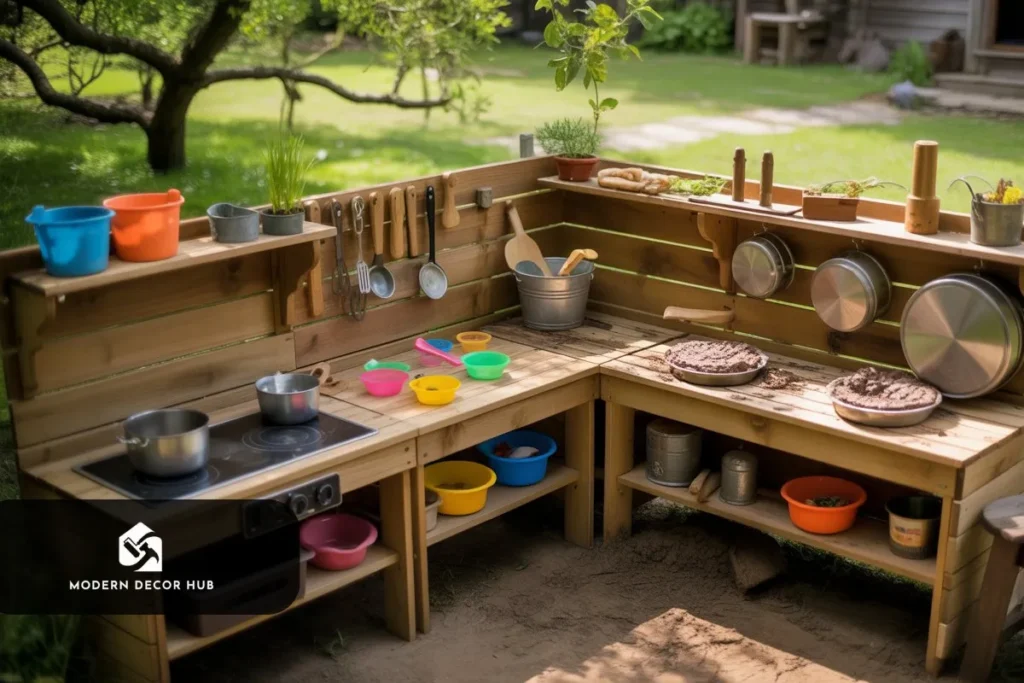
The classic activity in any mud kitchen is making mud pies or mud soups. Kids can mix mud, water, sand, leaves, & flowers to create their own “recipes.” This messy play is not only fun but also boosts creativity & imagination, letting children experiment without rules.
2. Roleplay & Pretend Cooking
Turn your mud kitchen into a mini restaurant, bakery, or potion lab. Kids can pretend to serve friends or family, take orders, & create menus. Roleplay helps develop social skills, communication, & teamwork while keeping playtime exciting.
3. Educational Games & Counting
Use the mud kitchen to sneak in learning! Count scoops of mud, measure water in cups, or time how long it takes to “bake” a mud cake. Activities like these teach early math & science concepts while kids think they’re just playing.
4. Seasonal & Outdoor Adventures
Change the play with the seasons. In fall, add leaves & acorns to the mud kitchen. In spring, try flower petals & fresh soil. Summer mud & water mixes keep kids cool, while winter snow adds a whole new texture for exploration. Seasonal variations make the mud kitchen exciting all year.
5. Group Play & Parties
Invite friends for a mud kitchen party. Kids can share tools, trade ingredients, & collaborate on big recipes. Group play encourages sharing, teamwork, & problem-solving. Watching children interact while creating their muddy masterpieces is priceless for parents.
Maintaining & Cleaning Your Mud Kitchen
1. Daily Cleaning Tips
After each play session, give your mud kitchen a quick cleanup. Rinse off mud, water, & sand from surfaces, utensils, & containers. A simple spray with a garden hose or wiping with a damp cloth keeps the area safe & ready for the next play session.
2. Organizing Accessories
Keep cups, pots, pans, spoons, & other tools in bins, hooks, or shelves. Organization not only makes the mud kitchen look tidy but also teaches kids responsibility for their play items. Color-coded containers can make cleanup fun & easy.
3. Weatherproofing & Outdoor Care
If your mud kitchen is wooden or DIY, apply a waterproof sealant to protect it from rain & sun. For plastic setups, store them under a cover or in a shed during harsh weather. Weatherproofing ensures the kitchen lasts longer & remains safe for children.
4. Preventing Mold & Pests
Keep water drained from basins & containers when the mud kitchen is not in use. Remove leftover leaves or debris that could attract insects. Regular checks prevent mold, ants, or other pests from spoiling playtime.
5. Seasonal Maintenance & Adjustments
Adjust your mud kitchen with the seasons. In colder months, bring small trays indoors or add warm water for sensory play. During hot summers, ensure shaded play areas & plenty of hydration for kids. Seasonal care keeps the mud kitchen fun, safe, & ready for year-round adventures.
Buying a Mud Kitchen
1. Choosing the Right Type
When buying a mud kitchen, think about your available space & how your kids like to play. Wooden kitchens are sturdy & durable, while plastic sets are lightweight & easy to move. For smaller areas, consider compact or tabletop mud kitchens that still offer plenty of creative fun.
2. Key Features to Look For
Look for safety features like rounded edges, stable legs, & non-toxic materials. Kitchens with shelves, hooks, & storage bins for utensils make organization easy. Features like sinks, counters, & included accessories make your mud kitchen more interactive & enjoyable.
3. Price Ranges & Quality
Prices vary depending on size, materials, & brand. Wooden mud kitchens often cost more but last longer, while plastic or compact sets are usually more budget-friendly. Investing in quality ensures your mud kitchen withstands outdoor conditions & provides long-lasting fun.
4. Shopping Options
Mud kitchens are available from toy stores, garden shops, & online marketplaces. Check reviews & ratings to ensure durability & safety. Some options include complete kits with all accessories, saving time & making setup easier.
5. DIY vs. Ready-Made
Decide whether to build a DIY mud kitchen or buy a ready-made set. DIY kitchens let you customize size, materials, & design, while ready-made options are quick to set up & often include extra accessories. Both provide endless fun, creativity, & learning opportunities.
Troubleshooting & Common Questions
1. Preventing Mold & Pests
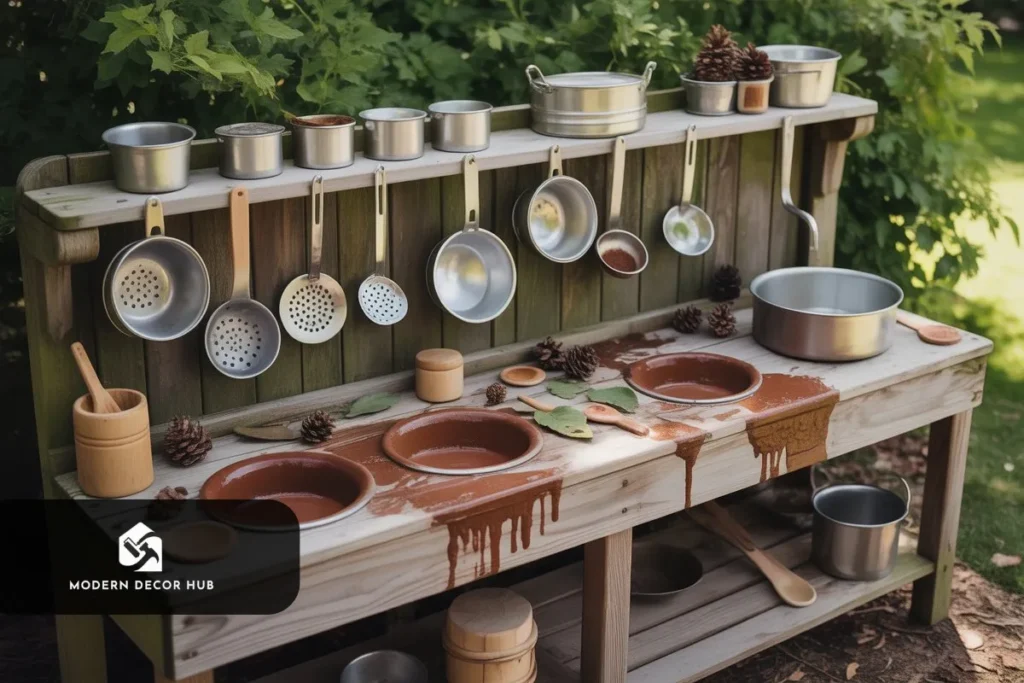
A mud kitchen left with standing water or leftover leaves can attract mold or pests. Always drain basins after play, remove debris, & check for insects regularly. This keeps play safe & hygienic.
2. Keeping Kids Engaged
Sometimes children lose interest in a mud kitchen. Rotate accessories, introduce new play recipes, or add seasonal elements like flowers, leaves, or snow. Small changes keep the experience exciting & fresh.
3. Adapting for Different Ages
A mud kitchen works for toddlers to older kids. For younger children, keep items simple & safe. For older kids, add challenges like measuring ingredients, creating themed recipes, or roleplaying a full restaurant experience.
4. Safe Outdoor Play
Ensure your mud kitchen is placed on a flat, stable surface away from hazards. Use non-toxic materials, secure loose parts, & supervise play for younger children. Safety ensures fun without accidents.
5. Maintenance Tips
Check your mud kitchen regularly for loose parts, sharp edges, or cracks. Regular cleaning, weatherproofing, & storage prolong its life & keep it a safe, fun play area.
Final Thought
A mud kitchen transforms ordinary play into unforgettable adventures. It encourages sensory exploration, creativity, & social skills, all while keeping children active outdoors. Whether you choose DIY or ready-made, large or compact, the right mud kitchen sparks curiosity, inspires imagination, & provides endless fun. Start building, organizing, or buying one today, & watch your kids create magical muddy memories every day.
FAQs
Mud kitchen design?
Choose a design that fits your space & play style, whether wooden, plastic, compact, or DIY. Include shelves, counters, & storage for a fun, organized setup.
Mud kitchen price?
Prices vary by size, material & brand; wooden kitchens are more expensive, while plastic or compact sets are budget-friendly. Quality ensures durability & long-term play.
Mud Kitchen, Outdoor?
Outdoor mud kitchens let kids play with mud, water, & sand safely in the backyard. Ensure it’s weatherproof & placed on a flat, stable surface.
Mud Kitchen accessories?
Include pots, pans, spoons, cups, watering cans, & optional chalkboards or planters. Accessories make play interactive, creative & educational.
Mud kitchen DIY IKEA?
You can repurpose IKEA furniture or trays to build a DIY mud kitchen. Add shelves, hooks & waterproof surfaces for a custom play area.
Mud kitchen Aldi?
Aldi offers affordable ready-made mud kitchens during seasonal sales. Check for safety, size & included accessories before purchasing.