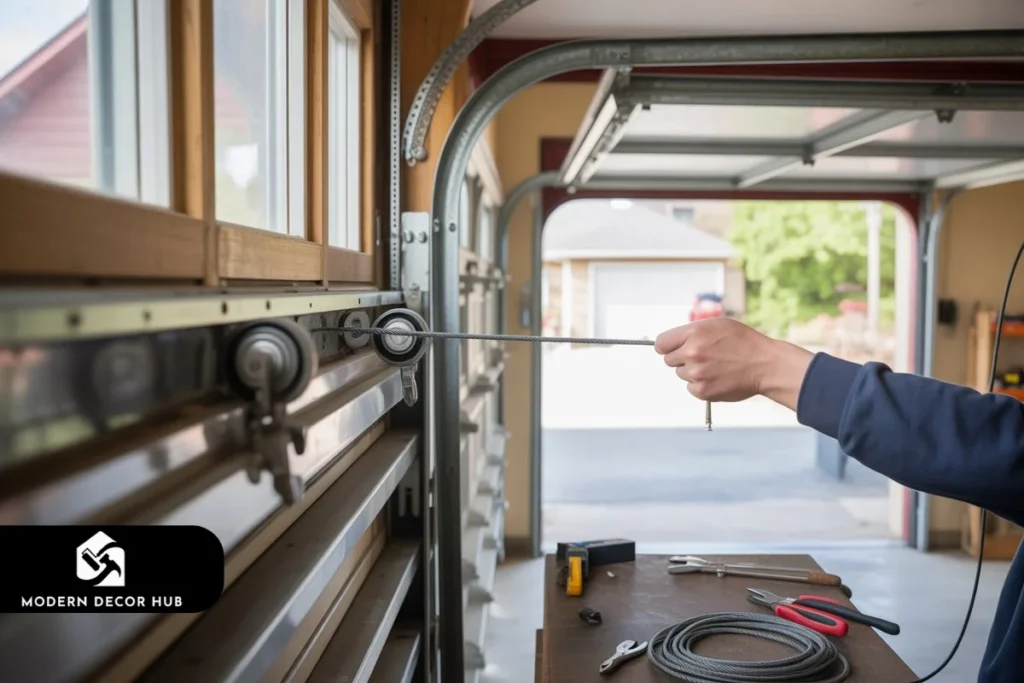
Garage door cable replacement is one of those repairs homeowners rarely think about until something goes wrong. One day the door opens smoothly. The next, it is crooked, jammed, or refuses to move at all. Because these cables work under high tension, a failure can be dangerous and expensive if ignored.
If you live in the USA and rely on your garage daily, understanding how garage door cables work, when they fail, and what replacement really involves can save you time, money, and stress. This guide explains everything in plain language so you can make smart decisions, whether you plan to call a professional or simply want to understand the repair process better.
What Is Garage Door Cable Replacement
Garage door cable replacement is the process of removing worn, frayed, or broken steel cables that lift and lower your garage door and installing new ones. These cables work together with springs to carry the full weight of the door, which can be anywhere from 150 to over 400 pounds.
When a cable fails, the door can become uneven, stuck, or fall suddenly. That is why replacing damaged cables quickly is not optional. It is a safety necessity.
How Garage Door Cables Work
Garage door cables are not standalone parts. They are part of a balanced system designed to make heavy doors feel light when opening and closing.
Here is how the system works:
- Steel cables attach to the bottom brackets of the door
- The cables wind around drums near the top of the door
- Springs store energy and transfer force through the cables
- As the door opens, cables lift evenly on both sides
If one cable snaps or loosens, the balance is lost. This is why a door may tilt, jam, or slam shut.
Signs You Need Garage Door Cable Replacement
Many homeowners ignore early warning signs until the problem becomes serious. Watch for these red flags:
- Door opens unevenly or looks crooked
- Loud snapping or grinding noises
- Frayed or rusted cables near the bottom brackets
- Door gets stuck halfway
- Garage door won’t close fully
- One side of the door hangs lower
If you see any of these issues, garage door cable replacement should be done immediately to prevent further damage.
What Causes Garage Door Cables to Break
Garage door cables are built to last, but they are not indestructible. Common causes of failure include:
Normal Wear and Tear
Over time, cables stretch and weaken due to daily use.
Rust and Corrosion
Moisture, road salt, and humidity can corrode steel cables, especially in colder states.
Poor Maintenance
Lack of lubrication and inspections speeds up wear.
Improper Installation
Incorrect tension or mismatched parts can shorten cable life.
Broken Springs
When a spring fails, the cable often takes the full load and snaps.
Types of Garage Door Cables
Not all garage door cables are the same. Using the wrong type can cause serious problems.
Torsion Spring Cables
- Used with torsion spring systems
- Mounted above the door
- Most common in modern homes
Extension Spring Cables
- Used with extension springs
- Typically run along the tracks
- More common in older systems
Safety Cables
- Prevent springs from flying if they break
- Required by code in many areas
A professional will always match the cable type to your door system and weight.
Garage Door Cable Replacement Cost in the USA
Garage door cable replacement costs vary depending on location, door size, and system type.
Average Cost Breakdown
| Service Type | Estimated Cost |
|---|---|
| Single cable replacement | $90 – $150 |
| Both cables replaced | $130 – $220 |
| Cable + spring replacement | $200 – $400 |
| Emergency service | +$50 – $100 |
Prices reflect 2025 averages across the USA. Replacing both cables at once is often recommended to maintain balance and avoid repeat service calls.
DIY vs Professional Garage Door Cable Replacement
DIY Replacement: Is It Worth the Risk?
Many homeowners search for DIY tutorials, but garage door cable replacement is not a typical weekend project.
Risks include:
- Severe hand and arm injuries
- Door collapse
- Damaged tracks or openers
- Improper tension leading to repeat failure
Unless you have professional tools and experience, DIY replacement is not recommended.
Professional Replacement: The Safer Choice
Hiring a licensed garage door technician offers:
- Proper safety procedures
- Correct cable sizing
- Full system inspection
- Warranty on parts and labor
In most cases, professional replacement costs less than repairing DIY mistakes.
Step-by-Step Overview of Garage Door Cable Replacement
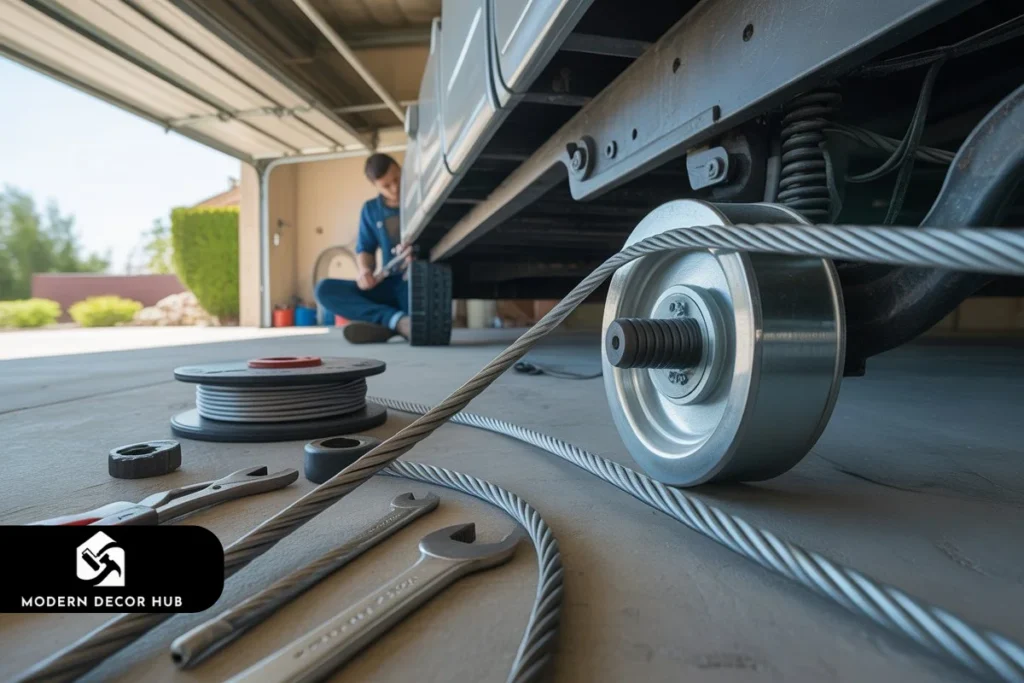
This overview explains the process without encouraging unsafe DIY work.
- Disconnect the garage door opener
- Secure the door in the closed position
- Release spring tension safely
- Remove damaged cables
- Install new cables on drums
- Reset spring tension
- Test door balance and alignment
Each step requires precision. Skipping or rushing any part can cause serious injury.
Safety Risks You Should Never Ignore
Garage door cables operate under extreme tension. Ignoring safety guidelines can lead to:
- Broken fingers or wrists
- Deep lacerations
- Concussions
- Property damage
If a cable snaps while the door is open, the door can fall without warning. Always treat cable issues as urgent.
How Long Garage Door Cables Last
Most garage door cables last between 8 and 15 years depending on usage and environment.
Factors that affect lifespan:
- Number of daily cycles
- Climate and moisture exposure
- Door weight
- Maintenance habits
Annual inspections can catch wear early and extend cable life.
Preventing Future Cable Problems
You can reduce the need for frequent garage door cable replacement with simple steps:
- Schedule annual professional inspections
- Keep cables clean and lightly lubricated
- Replace springs when they weaken
- Avoid forcing the door if it sticks
- Address rust immediately
Preventive maintenance costs far less than emergency repairs.
Legal and Documentation Tips for Contractors
If you are a contractor or garage door professional working in Pennsylvania or nearby states, proper paperwork matters just as much as quality repairs.
For example, PA compliant home improvement invoice forms help contractors stay legally protected, ensure transparency with customers, and meet state requirements. A detailed guide on this topic is available here:
https://moderndecorhub.com/pa-compliant-home-improvement-invoice-forms/
That article explains required invoice elements, common compliance mistakes, and why proper documentation builds trust with homeowners. It is especially useful for contractors handling repairs like garage door cable replacement where safety and liability are involved.
Final Thought
Garage door cable replacement is not something to delay or take lightly. These cables carry the full weight of your garage door, and even minor wear can turn into a serious safety risk if ignored. Knowing the warning signs, understanding the costs, and choosing professional help when needed puts you in control and prevents costly damage down the line.
For homeowners, timely replacement means smoother operation and peace of mind. For contractors, combining quality repair work with proper documentation and compliance builds trust and protects your business. Either way, staying proactive with garage door cable replacement is the smartest move for long-term safety and reliability.
FAQs
1. Can I open my garage door with a broken cable?
No. Operating the door with a broken cable is dangerous and can cause the door to fall or damage other components.
2. Should both garage door cables be replaced at the same time?
Yes. Replacing both ensures even tension and prevents future imbalance issues.
3. How long does garage door cable replacement take?
A professional typically completes the job in 60 to 90 minutes.
4. Is cable replacement covered by home insurance?
Usually no, unless damage was caused by a covered event like a storm.
5. How do I know if the cable or spring is the problem?
Uneven movement often indicates a cable issue, while a heavy door usually points to a spring failure. A technician can confirm.