
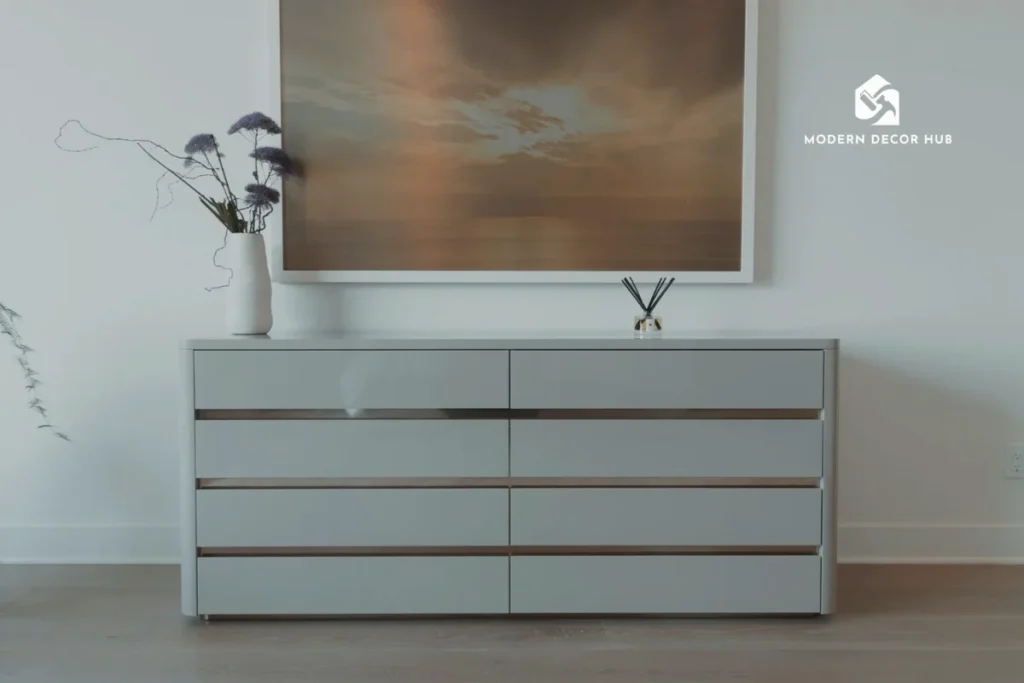
A dresser is more than a storage unit it shapes the organization, style, and overall vibe of your bedroom. Choosing the best dresser for bedroom isn’t just about picking a pretty piece of furniture; it’s about understanding your space, lifestyle, and long-term needs. From material and design to functionality and placement, every decision affects how efficiently your bedroom works and looks. This guide merges theory and actionable tips to help homeowners, renters, and design enthusiasts make the right choice. This guide will help you choose the best dresser for bedroom use by balancing storage, design, and long-term value.
Table of Contents
1. Understand Your Bedroom Layout Before Choosing the Best Dresser for Bedroom
The size and layout of your bedroom are key factors in choosing a dresser. A piece that’s too big can make the room feel cramped, while one that’s too small may not meet your storage needs.
Theory: Furniture scale affects perception of space. A well-proportioned dresser makes a room feel balanced and organized.
- Small Bedrooms: Tall, narrow dressers maximize vertical storage without consuming floor space.
- Medium Bedrooms: Wider dressers can double as TV stands or display surfaces.
- Large Bedrooms: Combining vertical and horizontal units provides versatile storage and visual interest.
2. Define Your Storage Requirements
Different lifestyles require different drawer setups. Understanding what you store ensures your dresser is functional.
Theory: Storage efficiency reduces clutter and improves daily routines, influencing mental clarity and room aesthetics.
- Clothes: Separate drawers for shirts, pants, and undergarments.
- Accessories: Small drawers for jewelry, watches, or belts.
- Bedding & Linens: Deeper drawers hold sheets, blankets, and seasonal items.
Tip: Smooth gliding drawers and sturdy hardware improve usability and longevity.
3. Choose the Right Material
The material impacts durability, maintenance, and design aesthetics.
Theory: Material science matters. Wood absorbs humidity differently than MDF or metal, which affects stability and lifespan.
- Solid Wood: Long-lasting, refinishable, and classic in style.
- Engineered Wood / MDF: Cost-effective and lightweight but less durable.
- Metal: Modern, strong, and ideal for industrial or minimalist interiors.
- Glass / Acrylic: Contemporary and visually light but fragile.
Matching material with your room’s style ensures a cohesive look.
4. Align With Your Bedroom Style
Your dresser should reflect your personal taste and complement your decor.
Theory: Consistent design elements create harmony and enhance perceived room size and comfort.
- Modern / Minimalist: Neutral tones, clean lines, and minimal hardware.
- Rustic / Farmhouse: Warm wood finishes with textured surfaces.
- Traditional: Rich wood tones and ornate details.
- Industrial: Metal frames with raw or matte wood surfaces.
Think of your dresser as both a functional piece and a design anchor.
5. Prioritize Functionality
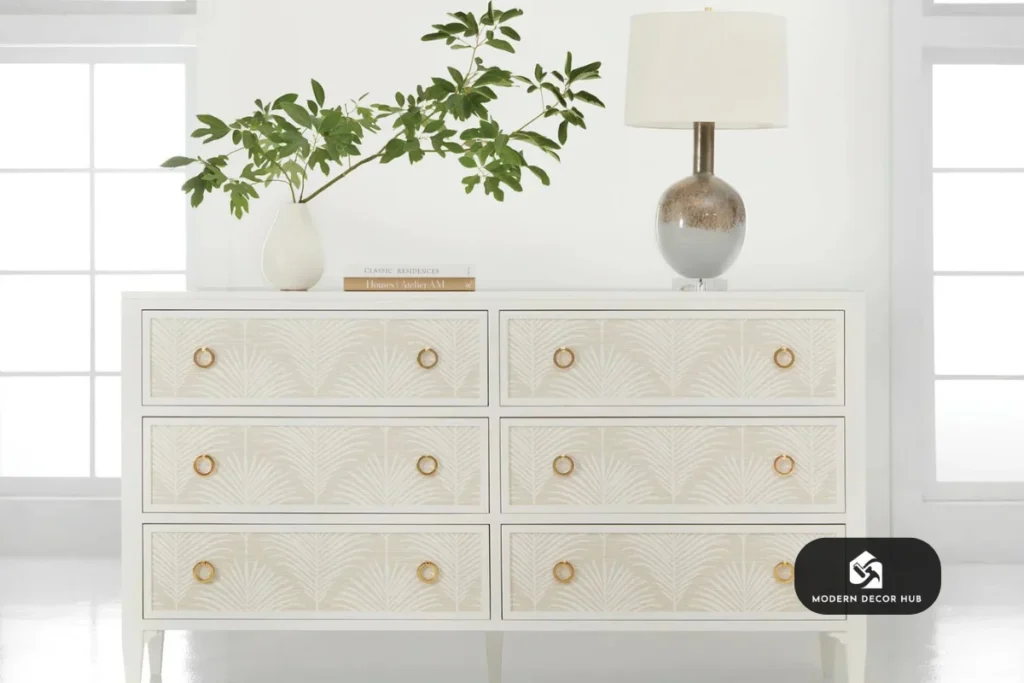
Functionality goes beyond storage. Consider these aspects:
Theory: Multi-functional furniture increases space efficiency, particularly in smaller bedrooms.
- Drawer Dividers: Keep small items organized.
- Soft-Close Drawers: Prevent slamming and extend lifespan.
- Top Surface Use: Display lamps, décor, or use as a vanity.
- Multi-Purpose Options: Some dressers include built-in desks or shelves.
6. Vertical vs. Horizontal Dressers
Theory: Orientation affects ergonomics, accessibility, and visual balance.
- Vertical Dressers: Tall and narrow; save floor space, ideal for small rooms.
- Horizontal Dressers: Wide and low; good for spreading out items or doubling as a surface.
Mixing both types can optimize storage and aesthetic appeal.
7. Consider Drawer Count and Depth
The number and size of drawers impact storage efficiency.
Theory: Drawer depth influences usability. Shallow drawers waste space; overly deep drawers can make items hard to access.
- 5–6 Drawers: Standard for individual use.
- 7–8 Drawers: Perfect for shared storage or larger wardrobes.
- Deep Drawers: Ideal for bulky items like sweaters or bedding.
8. Inspect Build Quality
A sturdy dresser is a long-term investment.
Theory: Quality construction reduces wear and tear and maintains structural integrity.
Look for:
- Solid wood or reinforced MDF
- Durable drawer slides and hardware
- Tight joints and smooth finishes
- Adequate weight support
Avoid cheap particleboard pieces if durability matters.
9. Budget Smartly
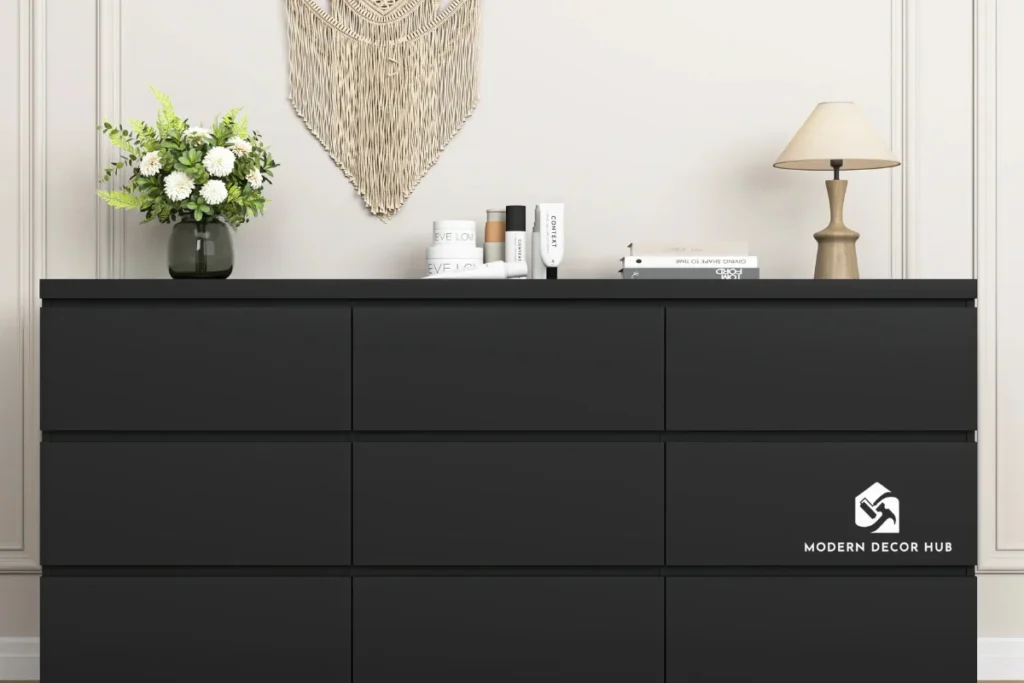
Your budget determines material, size, and brand options.
- Low Budget ($100–$300): Engineered wood or compact designs.
- Mid-Range ($300–$800): Solid wood, larger drawers, quality finish.
- Premium ($800+): Hardwood, designer brands, custom finishes.
Tip: Balance cost with durability and style for long-term value.
10. Placement Tips
Where you put your dresser affects usability and room flow.
Theory: Proper placement enhances both function and visual harmony.
- Keep away from direct sunlight to prevent fading.
- Position near the closet for easy access.
- Leave enough clearance to fully open drawers.
- Consider a mirror on top for dual functionality.
Final Thought
Choosing the best dresser for bedroom involves combining style, function, and careful planning. From understanding space and storage needs to selecting materials and drawer configurations, every factor matters. A thoughtful dresser enhances organization, complements your decor, and offers long-lasting value. Investing in the right piece ensures your bedroom remains functional, stylish, and clutter-free for years. Choosing the best dresser for bedroom needs ensures better organization, visual balance, and long-term comfort.
What dresser style suits a small bedroom?
Vertical, tall dressers maximize storage without crowding the room.
How do I match my dresser with existing decor?
Match colors, finishes, and design elements with your room for a cohesive look.
Are wooden dressers better than MDF or metal?
Solid wood is more durable and refinishable; MDF and metal are cost-effective and stylish alternatives.
How many drawers do I need?
Standard: 5–6 drawers; Larger: 7–8 drawers for more flexibility.
Can a dresser double as a TV stand or vanity?
Yes, wide, low dressers can serve multiple functions, depending on design.