The sunken living room is making a confident comeback in 2026, but this time with smarter layouts, modern safety features, and contemporary aesthetics that fit today’s American homes. Once a hallmark of mid-century modern architecture, the sunken living room has evolved into a versatile design element that blends comfort, visual depth, and architectural interest.
Whether you’re planning a new build, remodeling a home, or simply exploring interior design trends, this guide covers everything you need to know about sunken living rooms in 2026—from benefits and drawbacks to costs, layout ideas, and expert tips.
What Is a Sunken Living Room?
A sunken living room (also called a conversation pit or sunken lounge) is a living area set lower than the surrounding floor level, typically by one or more steps.
Instead of walls, the change in elevation:
- Defines the space visually
- Creates a cozy, intimate feel
- Adds architectural depth
In 2026, sunken living rooms are no longer retro novelties—they’re carefully planned design features aligned with open-concept living, biophilic design, and luxury residential architecture.
Why Sunken Living Rooms Are Trending Again in 2026
Interior designers across the U.S. are reintroducing the sunken living room for several compelling reasons.
1. Demand for Zoned Open Spaces
Open floor plans remain popular, but homeowners want clearer zones. A sunken living room creates separation without walls, making it ideal for:
- Open kitchens
- Great rooms
- Loft-style homes
2. Emphasis on Comfort and Connection
Conversation pits encourage face-to-face interaction, which aligns with post-pandemic lifestyle shifts emphasizing:
- Family connection
- Entertaining at home
- Relaxed luxury
3. Architectural Character
In a market saturated with flat layouts, a sunken living room adds:
- Visual interest
- Custom design appeal
- Higher perceived home value
Sunken Living Room Design Trends for 2026
Minimalist Modern Sunken Living Rooms
Clean lines dominate 2026 designs. Expect:
- Neutral color palettes (warm whites, taupe, sand)
- Flush steps with hidden LED lighting
- Low-profile modular seating
Mid-Century Modern Revival
A nod to the 1960s and 1970s, but updated:
- Terrazzo or polished concrete floors
- Built-in seating with modern upholstery
- Walnut wood accents
Biophilic Sunken Living Rooms
Nature-inspired interiors continue to trend:
- Indoor plants surrounding the pit
- Natural stone steps
- Large windows or skylights for natural light
Luxury Conversation Pits
High-end homes are embracing:
- Integrated fireplaces
- Plush custom cushions
- Smart lighting and built-in sound systems
Pros and Cons of a Sunken Living Room
Advantages of a Sunken Living Room
- Creates a cozy, intimate seating area
- Enhances visual depth and flow
- Improves acoustics for conversation
- Defines living zones without walls
- Boosts architectural interest
Potential Drawbacks to Consider
- Step-down areas may pose safety concerns
- Not ideal for aging-in-place without modifications
- Higher construction and remodeling costs
- Furniture options may be more limited
Understanding these trade-offs helps homeowners decide if a sunken living room fits their lifestyle.
Sunken Living Room Safety Considerations (2026 Standards)
Modern sunken living rooms prioritize accessibility and safety, especially in the U.S.
Key Safety Features
- Non-slip stair materials
- Step lighting or recessed LED strips
- Rounded step edges
- Handrails for deeper pits
Universal Design Options
- Shallow step transitions
- Optional ramps
- Removable seating platforms
These upgrades allow sunken living rooms to meet modern building codes while remaining stylish.
How Much Does a Sunken Living Room Cost in 2026?
Costs vary based on whether the sunken living room is part of a new build or a renovation.
Average Cost Breakdown (USA)
| Project Type | Estimated Cost |
|---|---|
| New Construction | $5,000 – $15,000 |
| Remodel / Retrofit | $10,000 – $30,000 |
| Luxury Custom Design | $30,000+ |
Factors Affecting Cost
- Structural changes
- Foundation depth
- Custom seating or built-ins
- Flooring materials
- Lighting and electrical work
A sunken living room is an investment, but one that can significantly elevate a home’s design appeal.
Best Layout Ideas for Sunken Living Rooms
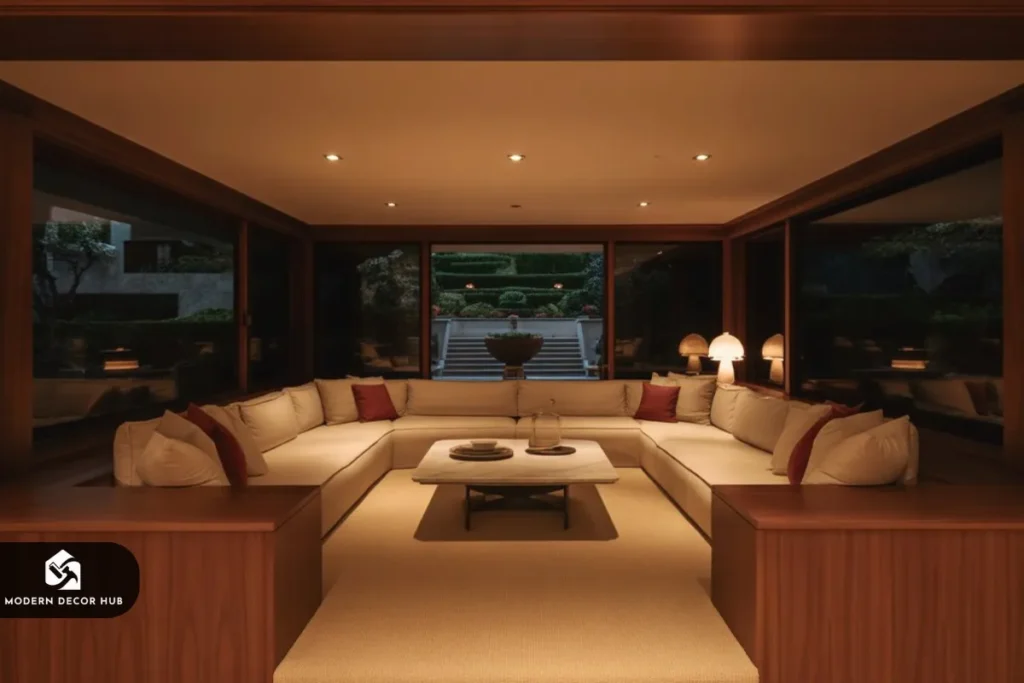
Open-Concept Homes
Place the sunken living room between the kitchen and dining area to:
- Anchor the space
- Create a natural gathering zone
Homes with Fireplaces
A fireplace becomes a focal point when paired with a sunken seating area.
Small Homes or Condos
Even shallow sunken areas (6–8 inches) can:
- Add definition
- Avoid overwhelming the space
Furniture Tips for a Sunken Living Room
Choosing the right furniture is essential.
Best Furniture Options
- Modular sectionals
- Built-in bench seating
- Low-profile sofas
- Round or oval coffee tables
What to Avoid
- Tall furniture that blocks sightlines
- Heavy recliners
- Oversized entertainment centers
Furniture should complement the lowered floor rather than compete with it.
Sunken Living Room vs. Traditional Living Room
| Feature | Sunken Living Room | Traditional Living Room |
|---|---|---|
| Visual Depth | High | Low |
| Space Definition | Natural | Requires walls or rugs |
| Cost | Higher | Lower |
| Accessibility | Moderate | Easier |
| Design Impact | Strong | Standard |
This comparison highlights why many homeowners see sunken living rooms as a bold but rewarding choice.
Is a Sunken Living Room Right for Your Home?
A sunken living room works best if:
- You enjoy entertaining
- Your home has adequate ceiling height
- You want a standout architectural feature
- You’re planning long-term occupancy
It may not be ideal if:
- Mobility is a concern
- You prefer minimal renovation
- Your space is very small
Sunken Living Room Maintenance Tips
Keeping your sunken living room looking great is simple with the right approach:
- Use durable, stain-resistant fabrics
- Vacuum steps and seating regularly
- Choose flooring that hides wear
- Install washable cushion covers
Low-maintenance materials are especially important for families with kids or pets.
Future Outlook: Sunken Living Rooms Beyond 2026
Design experts predict that sunken living rooms will continue evolving with:
- Smart home integration
- Flexible, modular designs
- Greater focus on accessibility
- Sustainable materials
Rather than fading, this design element is becoming more refined and adaptable.
Final Thought
A sunken living room in 2026 isn’t about nostalgia—it’s about intention. When designed with modern safety standards, smart layouts, and everyday livability in mind, it becomes more than a visual statement. It creates a place where people naturally gather, relax, and connect. If your home can support the layout and you value character over cookie-cutter design, a sunken living room can be a timeless feature that feels both personal and future-ready
FAQs
1. Are sunken living rooms outdated in 2026?
No. Sunken living rooms are a modern design trend in 2026, updated with safety features, minimalist aesthetics, and flexible layouts.
2. Do sunken living rooms add value to a home?
Yes, when well-designed, a sunken living room can increase perceived value and buyer interest, especially in custom or luxury homes.
3. Are sunken living rooms safe for families?
With proper lighting, non-slip materials, and shallow steps, sunken living rooms are safe for families, including homes with children.
4. Can you add a sunken living room to an existing house?
Yes, but retrofitting requires structural work and is more expensive than including one in new construction.
5. What is the ideal depth for a sunken living room?
Most modern sunken living rooms are lowered by 6–18 inches, balancing visual impact with safety and accessibility.